




Your firm
yourfirm.co.uk › about
Executive Search Firm in London | Your Firm
We help boards and CEOs hire the leaders who define the next decade. A senior partner led search firm with thirty years across financial services, technology and ...
SEO for recruitment agencies that ranks your firm for the searches clients and candidates run, then turns that traffic into enquiries. Technical SEO, ranked service pages and content, owned end to end by a fractional CMO and the team that delivers it.
Technical SEO
Ranked service pages
Content that earns rankings
Authority and digital PR
Local SEO for city desks

Recruitment and search only
Every client we rank hires people for a living
Led by a fractional CMO
A marketing director sets the plan, not an account manager
Commercial searches, not job titles
We chase the terms hiring managers use, not candidate traffic
Reported on enquiries
Rankings matter once they turn into briefs worth having
The Page That Counts
Most B2B buyers shortlist on page one and never scroll past it. We put your firm at the top of the search your clients and candidates are already running, then make the page they land on convert. It is the same commercial search discipline we run as a B2B SEO agency across wider B2B.
executive search firm london
About 1,240,000 results, 0.42 seconds
Your firm
yourfirm.co.uk › about
We help boards and CEOs hire the leaders who define the next decade. A senior partner led search firm with thirty years across financial services, technology and ...
The Usual Diagnosis
Most recruitment firms do not have a content problem. They have a plumbing problem. The site is built around vacancies that come and go, and that structure quietly buries the pages meant to bring in clients.
Search engines crawl a fixed amount of any site. On a recruitment site that budget is swallowed by hundreds of vacancy pages, so the pages that actually win clients are reached last, or not at all.
Filled vacancies that stay live, or vanish without a redirect, leave a trail of dead pages. It is the single most common technical fault we find on recruitment sites, and it drags down everything else.
A paragraph and a contact form will not outrank a competitor who has written properly about that market. Sector pages are the ones buyers search for, and on most sites they are the emptiest pages there.
Ask ChatGPT to name the best firms in your specialism and see who it recommends. Those shortlists are built from the sources AI trusts, and a site that is never cited loses mandates it was not even considered for.
The same template tries to speak to a hiring director and a jobseeker at once, so it ranks convincingly for neither. The two audiences need separate pages built on separate keyword maps.
Most first visits happen on mobile. A job board plugin loading a heavy search widget on every page makes the site feel broken, and buyers leave before your consultants ever hear from them.
Two Audiences, One Domain
A recruitment agency lives or dies on both sides of the market. Your recruitment SEO keyword map is built to rank for the clients placing briefs and the candidates worth placing, because winning only one half leaves the desk half full.
The client search
Hiring managers and founders search for a specialist before they brief one. These are commercial, high-value terms, and the firm that ranks for them gets the mandate before the competition is even contacted.
The candidate search
Candidates search roles, salaries and career questions long before they apply. Ranking for those terms fills your pipeline with people who found you, not people you had to chase, and keeps your best clients supplied.
What Recruitment SEO Covers
SEO for recruitment agencies is five disciplines run as one. Buy them in isolation and they cancel out; run them together, led by a fractional CMO who owns the plan, and they compound into rankings that hold.
The foundations search engines grade first: a fast, crawlable, well-structured recruitment website, clean indexation, JobPosting schema on live roles and a Core Web Vitals score in the green. Most recruitment sites leak rankings here before a word of content is written.
A service page for every sector and role you place, written to rank for the commercial terms clients type, then built to convert the visit into an enquiry. This is where recruitment SEO turns traffic into mandates rather than passing visitors.
Salary guides, hiring-market reports and sector insight that answer what your clients and candidates actually search, mapped to the queries that sit either side of a decision. Content is how a specialist recruiter out-ranks the job boards on the terms that matter.
Recruitment SERPs are crowded with aggregators holding more domain authority than any agency site. We earn the links and citations that close that gap: commentary, data stories and sector press that tell search engines your firm is a credible source.
When your desks are city or region specific, we build the local signals that win them: a tuned local business listing, location pages that rank for terms like recruitment agency plus your city, and the consistent listings that put you in the local pack.
Worth a conversation?
A 30-minute call about the searches your ideal clients are already making and which ones your site could own. Useful whether or not we work together.
AI Search
A growing share of buyers now ask an assistant before they run a search, and read a summary instead of a results page. It changes where the answer appears, but not what earns it. The firms being quoted are the ones already doing the fundamentals properly.
An answer engine can only cite a page it managed to crawl and understand. The same technical work that gets your sector pages indexed is what makes them quotable, which is why we fix the foundations first.
Pages that state the answer plainly near the top get quoted. Pages that bury it under three paragraphs of preamble do not. We structure sector and service pages so the useful part is the part a machine can lift.
Assistants lean on what other credible sites say about you. The digital PR and the market reports that earn links also earn the mentions that get your firm named in an answer.
We report visibility in AI answers separately from search rankings, because they move at different speeds and mixing them hides what is actually working.
What to Expect
SEO for recruitment agencies is competitive, so we sequence the work to show progress early and compound it over time. First indicators land in thirty to sixty days; meaningful position movement builds from month three.
We crawl the site, benchmark Core Web Vitals and indexation, and map the commercial and candidate keywords worth ranking for against what your competitors already hold. You get a prioritised plan, not a 200-point checklist nobody reads.
Site structure, page speed, crawl and index issues, internal linking and JobPosting schema. The unglamorous work that lifts every page at once and stops a recruitment site quietly leaking rankings.
A ranked service page for each sector and role you place, plus the salary guides and hiring insight that answer what clients and candidates search. Written to rank and built to convert the visit into an enquiry.
Digital PR, sector commentary and data stories that earn the links and citations recruitment SERPs demand, closing the authority gap on the job boards ranking above you.
Monthly reporting on the rankings, traffic and, above all, the enquiries your recruitment SEO produced. We report against the searches that feed your desk, never vanity keywords.
Who We Build It For
Every recruitment firm sells to two audiences, but the balance is different for each one. A staffing branch lives on local searches; a search practice lives on a handful of high-value terms. The keyword map changes accordingly.

Sector and city pages are where these firms win. We build the pages a hiring manager searches for, fix the jobs feed that is burying them, and get your specialisms ranking above the job boards on the terms that matter.
SEO for recruitment agencies
Board level buyers research quietly and shortlist before they contact anyone. Ranking for your practice areas and the questions that sit either side of a mandate is how your firm makes that shortlist.
SEO for executive search firms
Procurement teams and heads of talent search in very specific language. We build the comparison and capability pages that answer those searches, so your firm is found while the requirement is still being written.
SEO for RPO providers
Volume desks live on local search. Branch and city pages, properly structured and genuinely useful, put you in front of the employers hiring in that town this week rather than a national competitor.
SEO for staffing agencies
Small firms can out-rank far bigger ones on narrow terms. We find the searches your competitors have ignored, then build the handful of pages that own them.
SEO for headhuntersOur Clients
We hold the technical work, the content plan and the reporting for specialist recruiters, executive search firms and staffing businesses across the UK, the US and the Middle East. In most cases search started as one channel and grew into the whole marketing function.
Clear Recruitment, Meyrick Consulting, Adastrum Consulting, Quay Group, SmartChoice International, Nicholas Alexander.
Our Work
Three firms where we hold the search programme: the technical work, the pages that rank and the content behind them. Each case study sets out the brief, what we built and what it returned.

IT and Technology Recruitment
SmartChoice had the desks, the delivery hubs and a strong founder story, but no one owning marketing. Limivex came in as the fractional CMO with the team to deliver: we set the plan and ran the work, from a rebuilt SEO foundation and per-market landing pages to a content programme that publishes and distributes for the IT staffing niche.

IT and Workspace Solutions
We stepped in as QICO's fractional CMO and the team behind it: a 50-page strategy, a new brand, a website built to convert, and the demand programme to run it. Organic traffic rose by 2,600% in the first three months, and lead conversions by 40%.
Data Centre and Energy Infrastructure recruitment
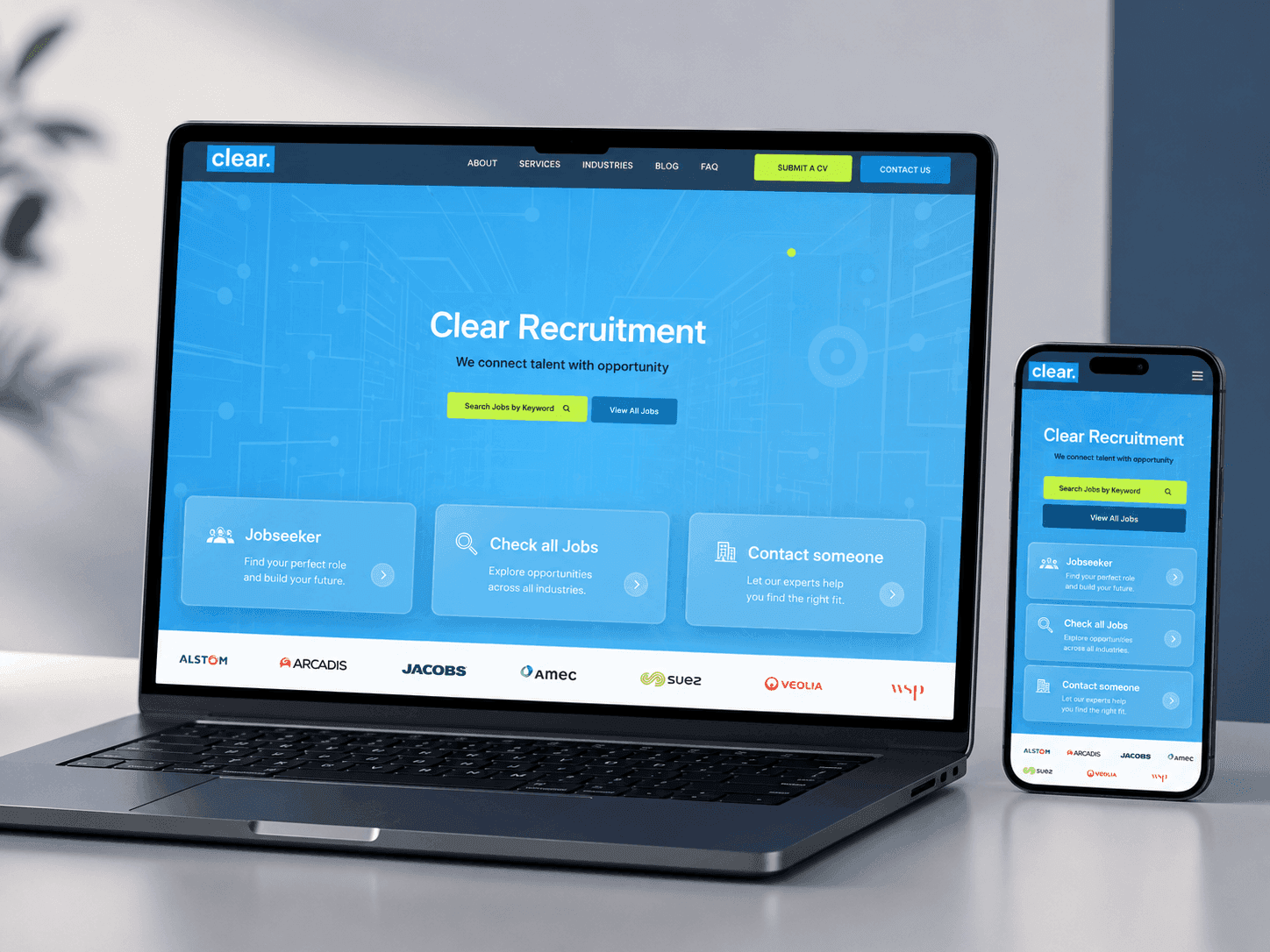
Clear had no senior marketing leader and a website that no longer matched the firm. So we became the function: a fractional CMO owning the plan, with the team shipping a custom website, an automated jobs feed off LinkedIn, a two sided portal, an ongoing SEO and blog programme, and a weekly LinkedIn cadence. The first inbound lead arrived within a week of launch, after a long quiet stretch on the old WordPress site.
Why Firms Choose Us
We already know how a jobs feed breaks a crawl budget, which sector pages are worth building and how a hiring director searches differently from a candidate. You are not paying us to learn your market.
Publishing more content on a site that cannot be crawled properly is the most common waste of an SEO budget. The technical work comes first, and it is usually the change that moves rankings fastest.
Client-side and candidate-side searches get their own pages, their own templates and their own reporting, so neither audience is served a page written for somebody else.
Rankings and traffic are leading indicators, not the point. Every month you see which searches brought people in and which of those became enquiries your consultants can actually work.
What Clients Say
2,600%
Organic traffic growth for QICO
26+
Finalised Projects
98%
Client satisfaction rate

01 / 05
“Limivex now controls our entire sales and marketing activity across Europe and the US, and I'm having calls every week with my ideal clients.”
“We enjoyed a great service, good responsiveness, brilliant output, and great execution.”
“Daniel transformed my social media presence and messaging in a short space of time. I only wish I'd met him 10 years ago.”
“Limivex was instrumental in the successful launch of 83DATA. Their creative design capabilities are beyond anything we've used before.”
“Limivex supported us with branding, web design, even a radio ad. Their knowledge of sales and marketing is second to none.”
Recruitment SEO FAQ

Or, email us at Email us
SEO for recruitment agencies is the work that gets your firm ranking on Google for the searches your clients and candidates run, then turns that traffic into enquiries. It combines technical SEO on your recruitment website, a ranked service page for each sector and role you place, content that answers what buyers search, and the authority to compete with the job boards. Run together, it puts you in front of hiring managers at the moment they are looking for a specialist.
First indicators show in thirty to sixty days as indexation and impressions grow. Because recruitment SERPs are competitive, meaningful position movement on the commercial terms your clients run typically builds from month three, with compounding traffic from month six. We report every month against the searches that feed your pipeline, so you can see progress well before the rankings peak.
Standalone SEO retainers for a recruitment firm typically run £1,000 to £3,000 a month in the UK, and below that something is usually templated. We work differently: SEO runs as one workstream inside a full marketing function led by a fractional CMO, from £3,600 a month, so the rankings work is planned alongside the content, brand and outreach that make it convert. Either way you get a fixed monthly fee agreed up front, with no surprises.
Clear Recruitment's rebuilt site brought its first inbound client lead within a week of launch. SmartChoice International ranks across eight international markets from one programme. And for QICO, a B2B technology firm we took on with the same method, organic traffic grew 2,600 per cent with 40 per cent more conversions. Every figure here is published in full in our case studies, with the client named.
They do different jobs. PPC buys visibility today and is ideal for testing demand or filling a gap quickly, but it stops the moment the budget does. Recruitment SEO compounds: it costs more patience up front and then keeps returning enquiries without paying per click. Most firms we work with run both, with PPC covering the terms SEO has not caught yet and SEO lowering the cost of every mandate over time.
Yes. Where your desks are city or region specific, we build the local signals that win them: a tuned Google Business Profile, location pages that rank for terms like recruitment agency plus your city, and consistent listings that put you in the local pack. It is one of the fastest wins for a regional recruiter, because local intent is high and the competition is often weaker than national terms.
Usually crawl budget. Search engines only crawl so much of any site, and on a recruitment site hundreds of vacancy pages absorb it, so the sector and service pages that win clients get crawled last or skipped. Add expired roles that were never redirected and thin filter pages, and the pages you most want ranked are the ones search engines reach least. It is a structural fix, not a content one.
Both, but on separate pages. A hiring director searching for an agency in your sector and a candidate searching for a role want completely different things, and a template that tries to serve both ranks convincingly for neither. We split the keyword map in two, build separate templates, and report the two sides separately so you can see which is producing what.
Not on the broad national terms, and we would not spend your budget trying. You can beat them on the specific ones: your sector, your seniority, your city, and the client-side searches the boards are not built to answer at all. That is where a specialist firm has the advantage, because the boards are optimising for volume rather than depth.
Yes, and the work barely changes. Assistants quote pages they can crawl and understand, favour content that answers the question directly, and lean on what other credible sites say about you. That is the same technical health, clear page structure and earned authority that search rankings reward. We report visibility in AI answers separately, because it moves at a different pace.
Usually not. We have worked on most of the common recruitment platforms and job board plugins, and there is normally enough control over page structure, metadata and redirects to do the work properly. Where a platform genuinely blocks something important we will tell you what it is costing you, so you can decide whether it is worth changing.
Both, and they work best together. If your current site cannot rank, technical SEO alone will not save it, so we also build conversion-led recruitment websites with the SEO baked in from the first line of code. Your fractional CMO owns the plan across both, and the same team keeps the site, content and rankings moving as one function rather than a stack of separate suppliers.
From The Journal

What a fractional CMO costs in the UK: day rates of £700 to £1,500, monthly fees of £3,000 to £12,000, what moves the price, and our own published ladder.

A practical guide to building a recruitment website in the UK: what to budget, what to build, why AI generated sites all look the same, and what a marketing agency adds that a template cannot.

How to win recruitment clients in a shrinking market: building a target list, what to say when you reach a hiring manager, the UK outreach rules nobody mentions, and how to turn a first vacancy into a lasting relationship.

AI tools now answer the question your clients used to type into a search box. Here is how generative engine optimisation works, what the research says moves the needle, and what recruitment firms should do about it.

A practical comparison of outsourced marketing and an in-house marketing team, covering the real cost of each, the skills you get, the risks nobody mentions, and how to work out which one your firm actually needs.

LinkedIn impressions are the most watched and least understood number on the platform. Here is what an impression actually counts, why yours have probably fallen, and what to do about it.

Attracting candidates as an agency is not the same as an employer doing it. Here is what actually works: your niche reputation, your consultants' profiles, job adverts worth answering, a real candidate experience and a talent pool you keep warm.

Email is the least glamorous channel a recruitment agency has, and one of the most profitable. Here is how to make it win briefs and keep candidates warm.
Get in Touch
Tell us where you are, where you'd like to be, and what's stood in the way. We'll come back within a working day with thinking you can use, whether we end up working together or not.
Keep Exploring